Germany Customs Clearance
Import, export and transit support for German and EU freight
Germany Customs Services for Import, Export and Transit
Customs Clearance, ATLAS Data and Export Documents
Germany and the Netherlands are both within the EU customs territory, so Union goods moving directly between the two countries normally do not require an import or export declaration. Customs formalities become relevant when goods enter from, leave for or move under transit to a non-EU country.
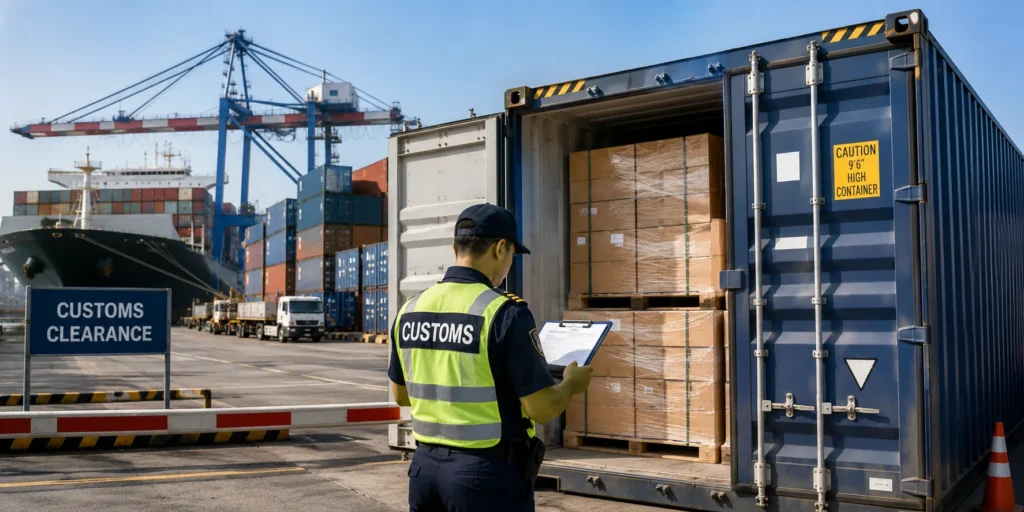
Benelux Trade Link coordinates Netherlands freight forwarding with the customs services required for shipments arriving in Germany, departing from Germany or moving through German ports, airports and road corridors.
Our customs consultancy helps prepare shipment data, check EORI and commodity information, coordinate import/export declarations or transit procedures with the appropriate representatives and align customs clearance with the physical transport.
EU Customs Knowledge
German and Netherlands customs coordination
ATLAS Data
Structured declaration and document preparation
Transit Support
T1/T2 movements across European corridors
Freight Integration
Customs connected with sea, air and road transport
Germany customs services we coordinate:
- German import clearance for non-EU goods
- German export declaration coordination
- EORI and declarant-data checks
- ATLAS declaration-data preparation
- T1/T2 and Common Transit coordination
- HS/commodity code and customs-value preparation
- Import duty and import VAT coordination
- Commercial invoice and packing-list checks
- EX-A, EUR.1 and A.TR document guidance where relevant
- Customs consultancy linked to the freight route
- Entry summary and carrier-data coordination where applicable
- Customs support linked to German road, sea and air routes
When is customs clearance needed in Germany?
Goods imported into Germany from outside the European Union must be placed under an appropriate customs procedure. Goods exported from Germany to a non-EU destination generally require an export declaration. Direct movements of Union goods between Germany and the Netherlands usually remain intra-EU movements, although excise goods, restricted products and goods under customs supervision can require additional formalities.
German Customs states that non-EU imports must be cleared and entered for a customs procedure. Its official import guidance also highlights duties, taxes and restrictions that may apply.
EORI and ATLAS customs data
An EORI number identifies economic operators in EU customs processes. German Customs requires relevant EORI numbers in customs declarations for parties such as the declarant, representative, importer/consignee, exporter/consignor or transit holder, depending on the procedure. See the official German Customs guidance on using an EORI number.
Germany processes many electronic customs messages through ATLAS. We help structure the commercial and logistics data needed by the responsible customs representative and coordinate corrections when invoice, packing, origin or transport details do not align.
Import customs clearance in Germany
An import declaration uses the goods description, commodity code, customs value, origin and procedure to determine duty, import VAT, restrictions and release requirements. The importer, place of clearance and customs representative should be confirmed before arrival.
For goods entering the EU through Germany, safety/security and arrival data may also be relevant. German Customs explains that entry summary declarations are generally lodged electronically at the customs office of first entry through the applicable system and include carrier information.
Export customs clearance from Germany
Exports from Germany to countries outside the EU normally require an electronic export declaration and completion of the EU exit process. The declaration data must be consistent with the commercial invoice, packing list, exporter details, commodity classification and transport booking.
If the shipment is exported through a Netherlands port or airport, customs and transport steps must remain aligned across the German office of export and the EU office of exit. We coordinate the logistics handover and can connect the movement with sea freight, air freight or road transport.
T1 and T2 transit through Germany
Transit allows goods to move under customs control between authorised offices before the destination procedure is completed. T1 commonly applies to non-Union goods, while T2 can apply to Union goods in specific transit situations. The movement reference, guarantee, offices and transport details must match the route. The European Commission provides official customs transit guidance.
EX-A, EUR.1, A.TR and T1 document differences
An EX-A document relates to the accepted EU export declaration for Union goods leaving the customs territory. A EUR.1 certificate is evidence of preferential origin and may support reduced or zero import duty only where the relevant trade agreement and origin rules are met. An A.TR certificate confirms the customs status of qualifying goods in free circulation under the EU–Türkiye customs union and is not proof of preferential origin. A T1 transit document is used to move non-Union goods under customs supervision before final clearance; it is neither an export declaration nor origin evidence.
The appropriate document set depends on the goods, status, origin, destination and route. We can link the customs process to warehousing and prepare a coordinated freight and customs quotation.
Common goods and industries
We support customs preparation for machinery, automotive parts, industrial components, electronics, consumer goods, textiles, chemicals and general commercial cargo. Food, plants, animals, excise goods, dual-use items and other controlled products may require specialist licences, certificates or border controls before acceptance.
Customs and freight through one contact
Combining customs preparation with transport planning helps avoid document corrections at the terminal, missed departure cut-offs and unexpected storage. Request customs assistance or contact our team with the origin, destination, commodity, value, Incoterms and route.
Customs services frequently asked questions
Is customs clearance required between Germany and the Netherlands?
Union goods moving directly between Germany and the Netherlands normally do not need an import or export declaration. Customs procedures are relevant for non-Union goods, external EU trade, transit, excise or restricted goods.
What is ATLAS in German customs?
ATLAS is Germany’s electronic customs processing environment. Customs representatives use structured shipment and party data for import, export, transit and other customs messages.
Do I need an EORI number for customs clearance in Germany?
Economic operators involved in EU customs declarations generally need an EORI number. The parties whose EORI must be declared depend on the role and customs procedure.
Can you coordinate a T1 movement through Germany?
We can coordinate the shipment data and customs handover for an appropriate transit procedure. The final setup depends on the goods status, route, guarantee and customs offices involved.
Can customs clearance be combined with transport to Germany?
Yes. We connect customs preparation with road, sea or air transport so declaration data, arrival information and delivery planning remain consistent.
What is the difference between EX-A and EUR.1?
EX-A relates to the EU export declaration for goods leaving the customs territory. EUR.1 is proof of preferential origin and only supports reduced duty where the applicable trade agreement and origin rules are satisfied.
When is an A.TR certificate relevant?
A.TR can be relevant for qualifying goods in free circulation under the EU–Türkiye customs union. It confirms customs status rather than preferential origin and is not interchangeable with EUR.1.
Does a T1 replace an export declaration?
No. T1 is a transit procedure for non-Union goods moving under customs supervision before final clearance. It is not an export declaration or proof of origin.
Need Germany customs services for your freight?
Share the route, goods and documents for a coordinated customs-clearance and logistics review.
Request customs assistance